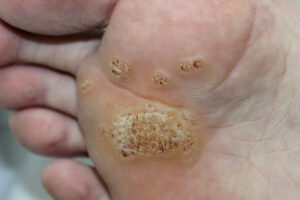
Plantar warts called verrucae are frequently found on the bottoms of the feet or close to the toes. They are brought on by the Human Papillomavirus (HPV), which is spread from person to person directly. There are different types of HPV, and they are all related to different areas of the human body.
What causes the Verrucae?
It is believed that the HPV virus thrives in wet, damp settings like swimming pools, locker room flooring, and public shower facilities. Especially if you have any small or undetectable scrapes or abrasions that make it easier for the virus to enter, you could catch verrucae by merely walking across the same floor area as someone who has one.
Who gets them?
Children, teenagers, and young adults are the ones most likely to develop verrucae, typically those who frequent public restrooms. Although some people are more vulnerable than others, most people do not have a natural immunity to the virus.
Are they dangerous?
Children, teenagers, and young adults are the ones most likely to develop verrucae, typically those who frequent public restrooms. Although some people are more vulnerable than others, most people do not have a natural immunity to the virus.
Ardee Foot Clinic Recommend Treatments?
Avoid rubbing or scratching a verruca in the beginning to prevent it from turning into a mass of warts. Put a plaster over it in its place. According to evidence, verrucae frequently go away on their own within six months in youngsters but take longer in adults (up to two years). This is due to the fact that the immune system of the body detects the virus' presence and naturally fights the infection, although it may take several months for this to happen. As certain therapies can be uncomfortable, especially for youngsters, and can have adverse effects, if it is painless, no treatment may be needed.
You can self-treat verrucae that are unpleasant, unattractive, or spreading by using ointments and gels from your neighborhood pharmacy or check out our online shop while carefully following the directions. Sometimes all that is needed to assist the body’s immune system battle an infection is to remove the dry skin from a verruca and apply a plaster. However, discontinue treatment right once and consult with one of our podiatrists if your verruca experiences exceptionally strong discomfort or if the skin around it turns red. This is because further treatment may be hampered if the healthy tissue surrounding a verruca is destroyed.
Before choosing a course of therapy, we can evaluate your general health and the condition of your feet. This might comprise:
Stronger than typical "over the counter" (OTC) remedia from your neighborhood drugstore are acid-based treatments.
Cryotherapy, which involves using liquid nitrogen or nitrous oxide to freeze the verruca.
Two more recent procedures that we may try:
Needling, which involves pricking the entire verruca with a needle to activate the body's immune system.
How can you prevent Verrucae?
Maintain healthy feet to prevent contracting verrucae. If your feet are sweaty, treat them with surgical spirit; if they are dry, moisten them with appropriate creams or lotions, but avoid putting between the toes. Always fully dry your feet after washing them.
Other suggestions include not sharing towels, shoes, or socks, wearing flip-flops in public spaces, and getting a prescription from the pharmacy for illnesses like athlete's foot.
Wear special verrucae socks if you have a verruca and wish to go swimming to prevent the infection from being spread. These can be worn as a shield against harm.
When should you come visit Ardee Foot Clinic ?
Never attempt to cure a verruca yourself if you have diabetes, poor circulation, are pregnant, or have any other health issues affecting your feet (or immune system). Instead, make an appointment with us.
Visit the clinic if you are concerned about your verruca, self-treatment is not working, the verruca looks to be getting larger or more painful, or all of these conditions apply
Please book an appointment with us if you feel after 3 weeks your feet are not getting any better.